

Enhancing Security in the Gaming and Hospitality Industry
The gaming and hospitality industry consists of diverse properties, including full-scale resorts, community casinos, racetracks, and retail facilities. These facilities demand sharp observational skills and proactive security practices to maintain safety and operational integrity.
In gaming and hospitality operations, adding more technology or procedures alone does not reliably reduce threats to operations. Threats are reduced when teams across surveillance, on-floor security, and guest-facing roles can consistently recognize meaningful behavioral deviations and clearly articulate why a situation warranted attention before policy violations, escalation, or guest impact occurs.
Threat Awareness for Security Professionals
Second Sight’s Threat Awareness for Security Professionals program is grounded in evidence-based behavioral recognition methods and emphasizes situational awareness, early identification of potential threats, and real-time articulation and communication between team members about specific threats.
In this case study, we describe participant feedback from 108 surveillance personnel from a multi-site gaming and hospitality organization in the midwestern United States. These individuals were trained in Second Sight’s methodology over a two-year period from August 2023 to May 2025 via the Threat Awareness program and follow-on refresher training.
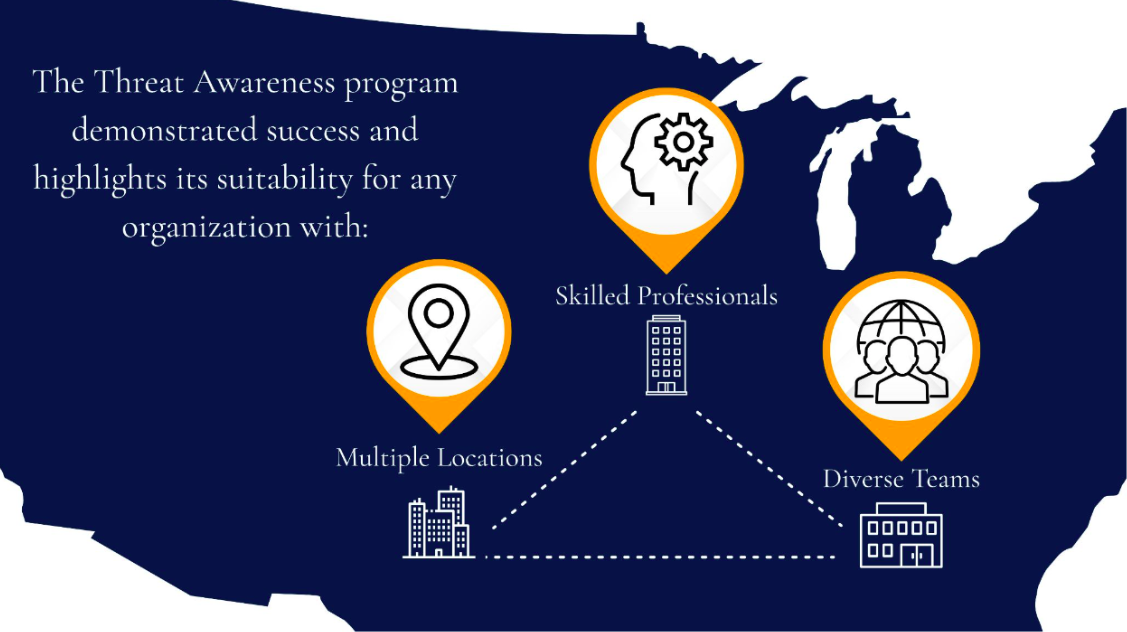
Nearly 41% of trainees reported integrating skills from the Threat Awareness program into their daily roles. This strong feedback from participants demonstrates the program’s success and suitability for any organization with multiple locations, diverse teams, and a critical need for skilled security and surveillance professionals.
High Stakes, High Traffic Environments
The nature of the gaming and hospitality industry necessitates a team of highly skilled, observant surveillance and security professionals capable of navigating environments where thousands of guests and staff interact daily. Surveillance professionals focus on monitoring multiple types of environments, including facility access points, hotel lobbies, parking areas, entertainment venues, and back-of-house operations.
“Being able to identify someone who is potentially concealing a weapon or harboring malicious intent is invaluable inside and outside of my job.”
Gaming and hospitality environments combine open public access with high-value assets, cash-intensive operations, and dense guest traffic. Potential behavioral threats span high-traffic areas such as gaming floors, hotels, event spaces, and restaurants, as well as low-visibility zones such as parking structures and back-of-house areas. Surveillance personnel must also monitor cash handling routes, safeguard hotel rooms and VIP areas, and respond to acts of violence or disruption. These environments demand both disciplined observation and discretion to identify threats early without unnecessary disruption to the guest experience.

The incidents with the greatest operational, reputational, and legal impact often begin as subtle behavioral deviations that are easy to overlook in busy environments. Security and surveillance personnel must make rapid judgments that may later be reviewed by leadership, regulators, legal counsel, law enforcement, insurers, or gaming authorities.
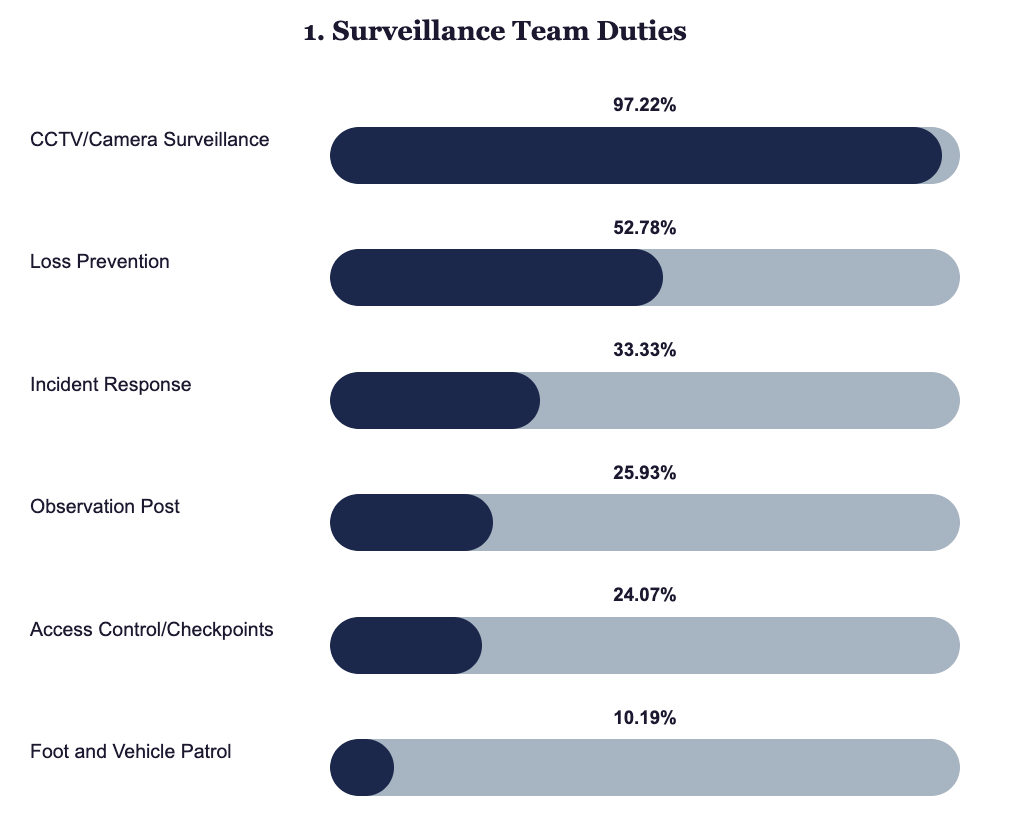
While physical security teams are responsible for standard on-site security functions (e.g., uniformed patrol, access control, incident response), surveillance team members usually play a more specialized role focusing on continuous monitoring. Common duties reported by trainees are described in Figure 1.
Why Threat Recognition Matters
Personnel must be prepared to respond to a wide range of potential threats, from high-stakes emergencies to routine disturbances. Past high-profile incidents at Casinos throughout the United States exemplify the types of threats faced by security teams
Grand Sierra Resort (Reno, Nevada, 2025): A deadly shooting outside the casino’s valet area highlighted vulnerabilities in external access points and reinforced the need for perimeter security and coordination with law enforcement.
Kickapoo Lucky Eagle Casino (Eagle Pass, Texas, 2025): A shooting near the entrance led to new structural barriers, enhanced guard visibility, and improved access control measures.
Rivers Casino Philadelphia & Seminole Hard Rock Tampa (2024): Discovery of suspicious packages and bomb threats in Philadelphia and Tampa prompted evacuations and reviews of emergency response plans, reinforcing the value of staff preparedness and clear communication channels.
Duck Creek Casino Shooting (Oneida, Wisconsin, 2021): A workplace-related shooting resulted in multiple fatalities and injuries. The incident prompted gaming operations nationwide to reassess internal threat recognition, workplace violence prevention, and rapid response protocols.
Arizona Casino Armed Robbery (2018): A coordinated armed robbery demonstrated how rapidly financial-motivated violence can unfold, emphasizing the need for both visible deterrents and well-trained staff capable of recognizing suspicious pre-incident behaviors.
These events collectively reveal a common thread—early detection and intervention saves lives. Employees who are trained to identify suspicious behavior, recognize pre-attack indicators, and report concerns promptly form the foundation of a resilient security posture. Observation and visual threat detection training can help team members effectively respond to incidents like these and enhance their proactive capabilities.
From Reaction to Recognition
After training, organizations move from uneven, intuition-driven detection to a shared, repeatable observation and articulation framework. Teams are better equipped to recognize early indicators of potential threats, such as the presence of a weapon, and intervene appropriately before escalation. The result is a consistent security posture that reduces risk without compromising guest experience or operational flow.
When teams lead with prevention, they enhance the perception of safety for guests and maintain the reputation of the property by preventing events from escalating.

In addition to high-risk incidents, surveillance teams in the gaming and hospitality industry routinely manage a broad range of lower-intensity but frequent situations, such as intoxicated or disruptive guests, trespassing by banned individuals, unattended items, lost children, and hotel noise complaints. These incidents require constant vigilance and coordinated response across departments to maintain a safe, welcoming environment for all guests and staff.
Because many threats do not present themselves through obvious or immediate danger, surveillance personnel must be adept at recognizing early warning signs, whether it’s subtle shifts in behavior, suspicious movement patterns, or environmental anomalies (e.g., loitering in restricted areas, agitated body language, or repeated surveillance of entry points). To support this kind of proactive visual threat detection, our Threat Awareness program provides advanced training to sharpen observational skills and behavioral analysis, ensuring that personnel are anticipatory and proactive, helping to prevent problems before they begin.
Proactive Prevention and Real-world Operational Alignment
“I observe CCTV cameras at my job and the techniques I learned from this program have shown me what I should look or in regard to suspicious or threatening behavior.”
Second Sight’s Threat Awareness for Security Professionals program is an 8-hour self-paced and fully online program grounded in evidence-based behavioral recognition methods. It emphasizes situational awareness, early identification of potential threats, and the real-time articulation and assessment of potential threats. To reinforce key concepts, a one-hour refresher is provided six months after the initial session.
To learn more about this program, visit our website.

Skills-based Security Training
The main purpose of the Threat Awareness program is to equip security professionals with the tools to proactively identify threats and contribute meaningfully to their team’s situational awareness and response readiness.
Specifically, participants learn how to:
Systematically observe their environment: Participants learn a structured approach to observing their surroundings, assessing behavior patterns, and detecting anomalies using a process called “baselining.” This skill helps personnel establish behavioral baselines for mixed-use zones such as gaming floors, hotel lobbies, event venues, restaurants, parking areas, and back-of-house spaces.
Identify persons of interest: Using patterns of behavior, participants learn how to identify meaningful behavioral deviations from baseline, ultimately helping them identify potentially dangerous individuals who may warrant closer observation.
Evaluate behavioral threat indicators: Participants learn how to identify behavioral threat indicators and distinguish benign anomalies from behaviors that signal elevated risk, such as behavioral indicators that may include the presence of a weapon. This helps determine the threat level of a person of interest, enabling early and appropriate intervention before situations escalate and become dangerous
Communicate threat-related observations: Participants develop the ability to articulate what they observe in an objective and clear manner. For example, saying “the individual has a dead arm and is repeatedly touching their waistband,” is much clearer and more specific than saying “this person is suspicious." This improves clarity and consistency in reporting and documentation used for investigations, regulatory review, and executive decisionmaking. Stronger and more consistent documentation is also more likely to withstand regulatory, legal, and insurance review.
Apply skills: Learning is reinforced through scenario-based practice, allowing participants to apply observation and articulation techniques in controlled but realistic settings to reinforce learning and retention.
“Thinking critically about threat indicators grounds threat awareness in the realm of everyday scenarios and provides context for why every threat indicator should be taken with a grain of salt, even when multiple indicators are present.”
Compared to traditional lecture-based sessions, Threat Awareness for Security Professionals emphasizes practical skill-building through scenario-based learning and real-time feedback. This approach actively engages trainees in practicing observation, critical thinking, and communication skills. This method is more effective than passive learning methods (such as memorizing information from lectures), leading to better retention and real-world application under pressure.
For a more detailed explanation of the instructional design principles underpinning our training methodology, check out our companion publication: “Instructional Design and Active Threat Assessment Training.”
Participant Metrics
Participant metrics revealed robust program engagement and validated the training’s operational impact. Between August 2023 and May 2025, a total of 108 participants successfully completed the 8-hour Threat Awareness for Security Professionals program.
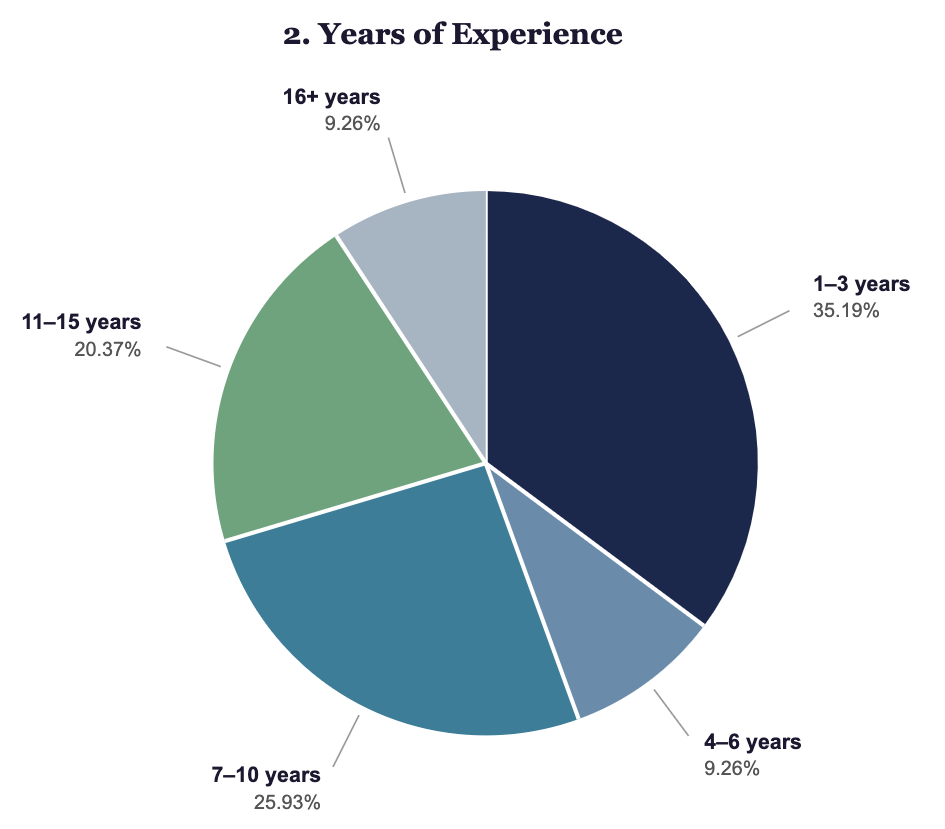
Participants spanned a broad range of experience levels. Approximately 14% of participants were supervisors or managers, while 86% were frontline surveillance personnel. These individuals had significant experience in the security industry as outlined in Figure 2, with more than 50% having 7 or more years of experience.
Most participants completed the training in an average of 15 to 22 days, with a median of 17 days. Participants demonstrated strong knowledge retention, achieving an average score of 88% on the final test, which includes a mix of theoretical and applied components. This performance indicates a strong grasp of key concepts and effective retention of critical material.
Learning Satisfaction
Across all major survey dimensions, learners reported meaningful value from their training. The majority of participants felt the training was challenging, stimulated their thinking and reinforced prior instruction while offering valuable opportunities to practice new skills and refine existing knowledge in a realistic environment.
93.5% felt that the online training platform was intuitive and easy to use.
91.7% felt that the program provided realistic opportunities to practice what they learned,
90.7% agreed that the practical exercises helped solidify understanding of the material and how it applies to the job, and
89.8% of participants felt that the program challenged them and stimulated their thinking.
Operational Relevance
“This information will help guide my thought process to identify threats and persons of interest.”
Post-training surveys indicate the utility of this training for frontline surveillance staff and for supervisors. The participants indicated high levels of satisfaction, skill application, and real-world relevance, showing strong alignment between the course content and the primary day-to-day responsibilities. The skills are useful not only when observing situations in real-time, but also in reducing the time it takes to review historical surveillance footage.
Figure 3 outlines key metrics reported by trainees immediately following training completion.
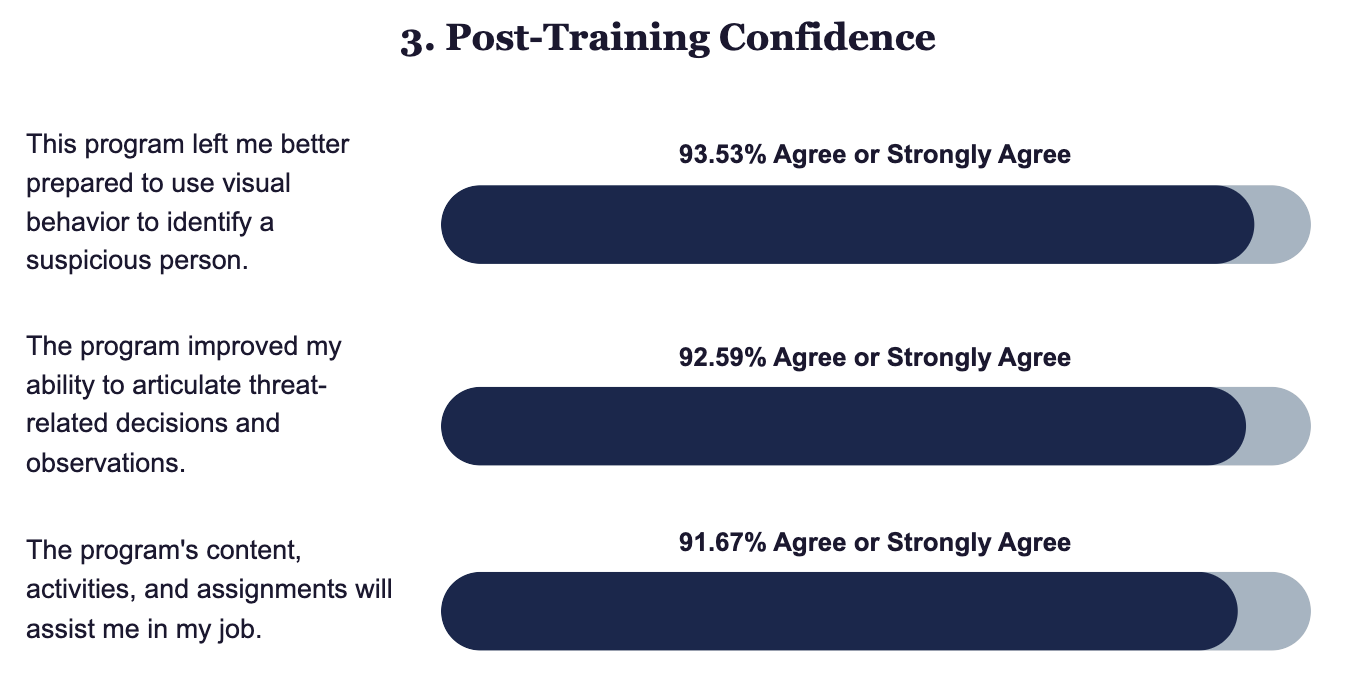
These improvements in communication and operational skills reinforce the program’s focus on real-world readiness and effective field operations.
Immediately following their training, participants reported that it was broadly applicable to their primary duties. For example, 91.7% of participants reported that the training would help them perform CCTV surveillance duties. In addition, they reported application of their training to other duties, such as investigations (55.6%), incident response (39.8%), manning observation posts (29.6%), and maintaining access control (24.1%).
Skill Usage Over Time
Knowledge and skills gained through training can decay over time. To reinforce skills learned in the 8-hour program, all graduates were enrolled in the 1-hour Threat Awareness in Practice refresher training between 6 and 12 months after program completion. In this section, we report on feedback from 71 participants who completed their refresher training. Findings from an end-of-course survey indicate continued interest and investment in skill reinforcement beyond the initial session.
Feedback affirmed the usefulness of the training in helping surveillance personnel carry out their duties. The majority of participants who completed the refresher course agreed that the training helped them in their job, offered them valuable opportunities to practice their skills, enhanced their ability to identify suspicious persons, and helped them better articulate and explain their decision making. Detailed feedback is included in Figure 4.
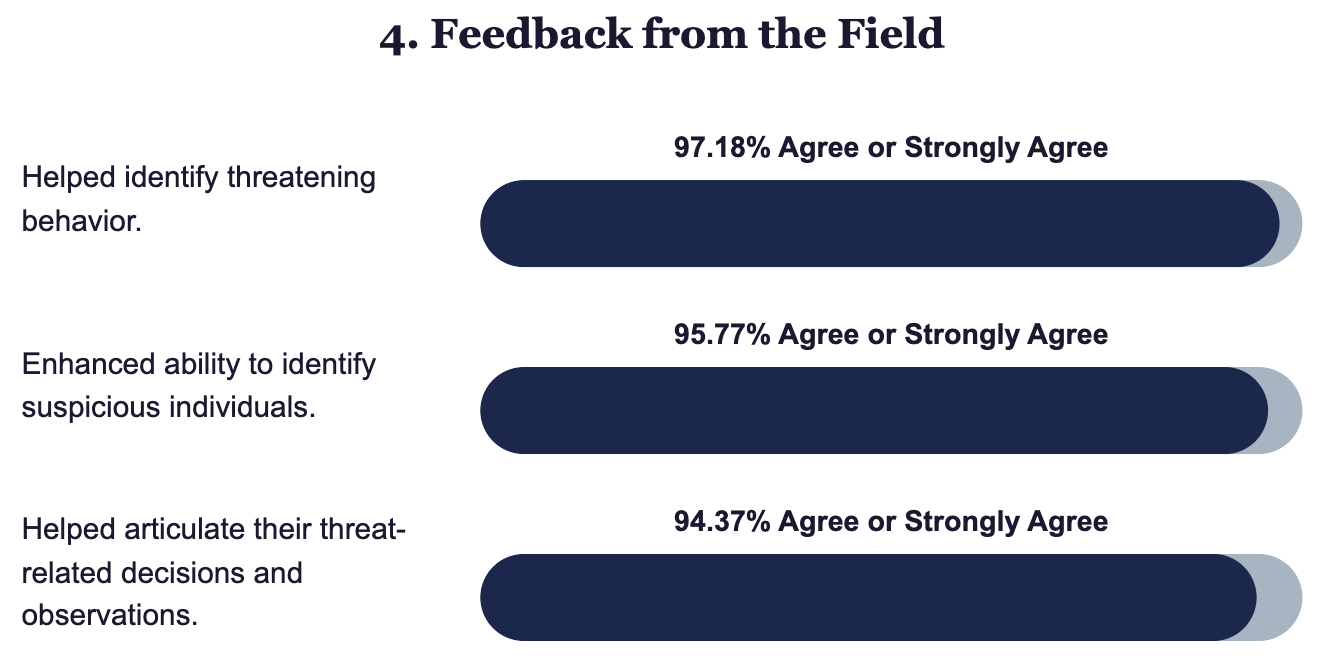
This is strong feedback after a minimum of 6 months of usage in the field. Trainees report that the Threat Awareness program techniques are supporting their work to keep the venue, staff, and patrons of properties safe.
“It has helped me when watching guests in the casino because if they are reported as “suspicious” it’s easier to confirm if they warrant contact by security.”
These consistently strong outcomes reflect the practical utility of the training and its ability to shift behavior in live environments. The positive reception of the training spans all levels of the organization, with validation coming from both rank-and-file team members and leadership.
Participants were also asked how frequently they use the skills taught during the training. Responses showed strong integration into daily and weekly workflows. Frequency of skill usage is reported in Figure 5.
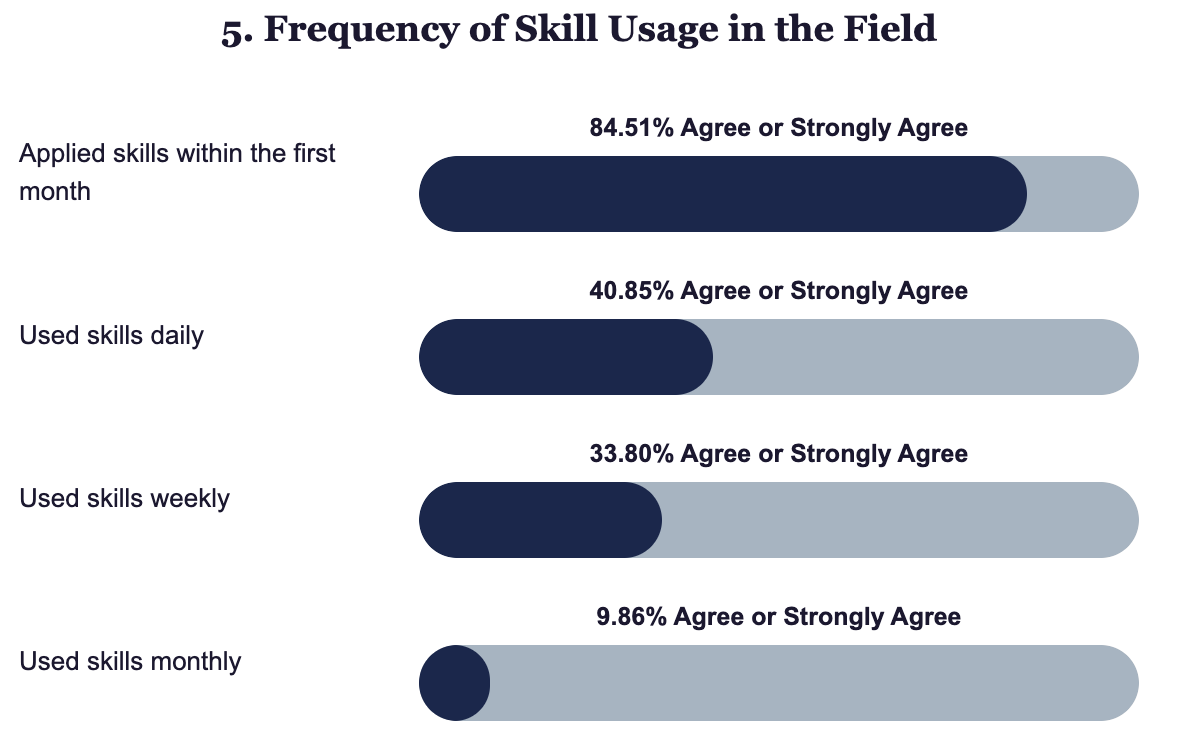
Trainee feedback showed frequent usage of the skills learned in the Threat Awareness program, enhancing surveillance across the organization. 40.8% of trainees reported integration of skills into their daily roles, while 74.6% said they used them at least weekly. Together, these findings show that Threat Awareness for Security Professionals enhances knowledge, improves threat recognition, real-time decision-making, and day-to-day vigilance across a high-risk operational environment.
In addition to providing a preventative benefit, trainees also reported more efficient post-incident response with usage of observation techniques reducing the amount of time required to review video and document observations.
While this training was initially delivered to surveillance personnel in the gaming and hospitality industry, the skills developed are broadly applicable and beneficial to security teams and frontline staff in various functions. These findings make a compelling case for the continued integration of active threat assessment training into broader security operations.
Conclusion
Strong feedback across all roles and reported daily integration of skills on the job demonstrate how the Threat Awareness for Security Professionals helps deliver measurable improvements in personnel’s observational abilities, decision-making, and communication, all of which are critical capabilities for proactive and effective surveillance operations.
The skills learned in the program help personnel identify meaningful behavioral deviations and distinguish benign anomalies from behaviors that signal elevated risk or potential policy violations. Creation of a shared observation and articulation framework across surveillance, patrol, access control, and guest-facing teams can improve consistency across teams, shifts, and property types, and improve clarity and consistency in reporting and documentation for investigations, regulatory review, and executive decision-making. Given the expansive footprint across multiple properties and a dispersed workforce in the gaming and hospitality industry, ongoing training programs like the Threat Awareness program are essential for maintaining operational readiness.
Second Sight’s demonstrated success highlights this training’s suitability for any organization with similar characteristics: multiple locations, diverse teams, and a critical need for standardized training specifically designed to enhance the skills of both security and surveillance professionals.
For more information about the training program and to learn how Second Sight Training can help your team, please visit the gaming and hospitality page on our website.
-
ABC News. (2025, July 28). 3 dead, several injured in shooting outside casino in Reno. https://abcnews.com/US/hurt-shooting-casino-reno-police/story?id=124142754
CBS News. (2021, May 2). 2 killed in shooting at Wisconsin casino before police take out gunman. https://www.cbsnews.com/news/wisconsin-shooting-oneida-casino-green-bay-2-killed/
CBS News Philadelphia. (2025, February 20). Rivers Casino Philadelphia open after brief evacuation Thursday morning. https://www.cbsnews.com/philadelphia/news/rivers-casino-philadelphia-evacuated/
Federal Bureau of Investigation. (2018, August 8). Casino employees arrested for the Mazatzal Casino robbery [Press release]. https://www.fbi.gov/contact-us/field-offices/phoenix/news/press-releases/casino-employees-arrested-for-the-mazatzal-casino-robbery
Meehan, Nathan. (2023, May 1). “Instructional Design and Active Threat Assessment Training.” Second Sight Training Systems. https://www.secondsight-ts.com/threat-assessment-blog/instructional-design-and-threat-assessment-training.
The Associated Press. (2025, September 30). 2 killed, 5 wounded when man opened fire in casino parking lot in Texas, authorities say. AP News. https://apnews.com/article/deadly-casino-shooting-texas-8a8453ec6ce5d48e2ff36572816afa9c
The Associated Press. (2024, September 30). Seminole Hard Rock Tampa evacuated twice after suspicious devices found at the casino. AP News. https://apnews.com/article/casino-evacuation-florida-2b4d0b4c68b23c346f972e668199e6d9
