

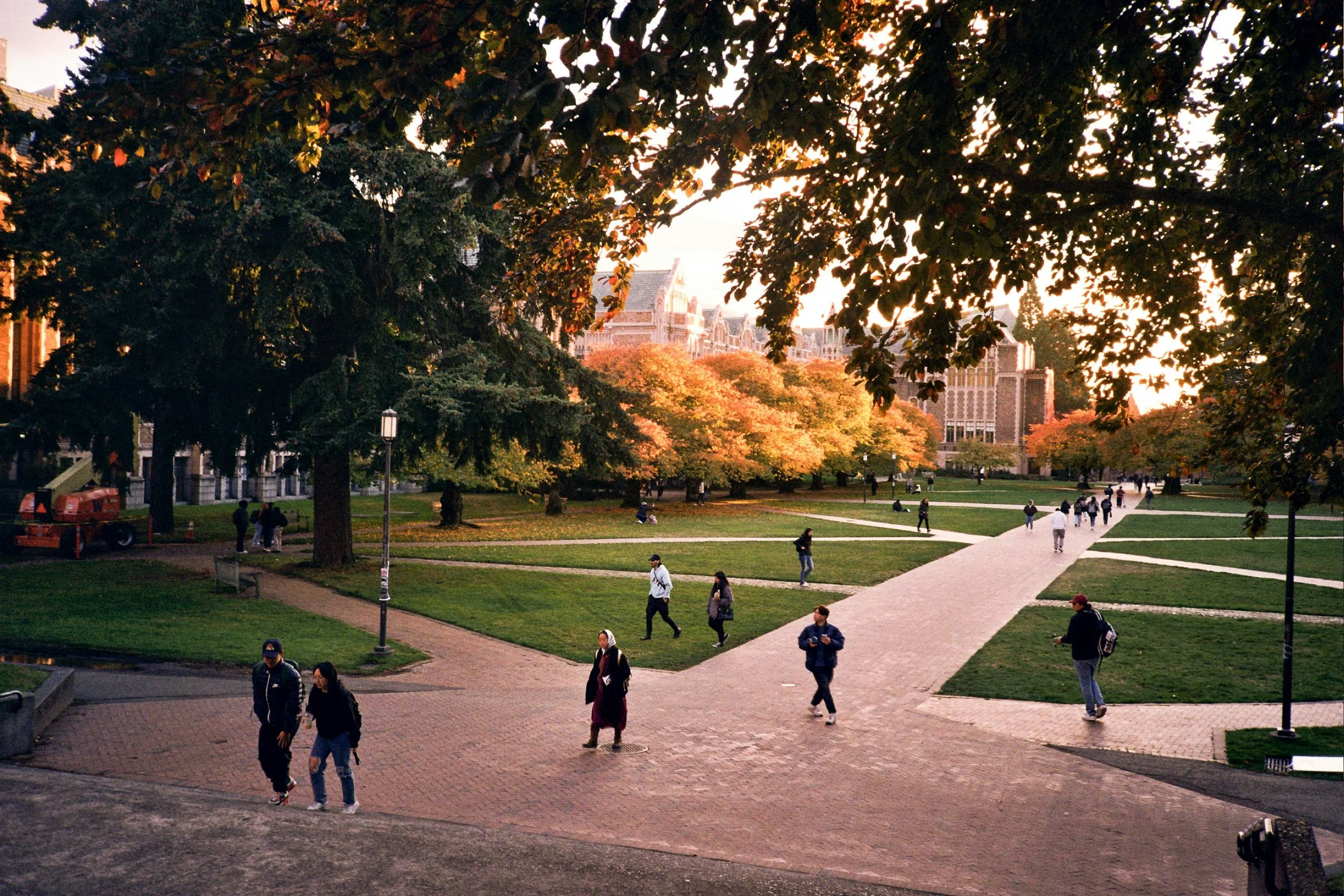
Higher Education
Safer campuses begin with shared awareness.
Higher education environments span classrooms, residence halls, athletic facilities, campus events, and administrative offices, with constant interaction among students, faculty, staff, and visitors arriving from across the country and around the world. The incidents with the greatest safety and reputational consequences often begin as subtle behavioral deviations that are easy to overlook on busy campuses.
Second Sight equips students, faculty, administrators, behavioral intervention team members, and campus security personnel with a structured, repeatable observation process that improves early recognition of concerning behavior, supports earlier intervention, and reinforces consistent, defensible decisions. Awareness becomes a teachable skill shared across the entire campus, without disrupting the academic environment or student experience.

Threats are subtle
The incidents with the greatest impact on students, faculty, and campus communities rarely begin with overt threats. They begin with subtle behavioral deviations:
Changes in demeanor or escalating interpersonal conflict among students
Unusual movement, boundary-testing, or attempts at unauthorized access in residence halls or restricted areas
Behaviors associated with individuals carrying weapons
Patterns of distress, agitation, or withdrawal that do not match the environment
On large, open campuses, these signals are easy to overlook or difficult to articulate clearly. Faculty, administrators, Behavioral Intervention Team (BIT) members, and campus security make rapid decisions that may later be reviewed by university leadership, legal counsel, law enforcement, or the public.
Reporting systems and physical security alone do not reliably prevent safety incidents. Without a shared framework, recognition becomes inconsistent, reporting becomes uneven, and decisions become harder to defend.
Second Sight closes that gap
Training Designed For Everyone
One Framework. Multiple Roles
For Faculty, Staff, and Students
Practical situational awareness training that helps students, faculty, and staff recognize behavior that does not align with the campus environment and communicate those concerns clearly through our Situational Awareness for Safety course. The same foundational course supports every member of the campus community.
For Campus Security
Advanced behavioral detection training that sharpens how campus police and safety personnel interpret behavioral indicators, supports defensible decision-making, and improves the clarity of incident documentation through our Threat Awareness for Security Professionals or our Threat Awareness for Law Enforcement program.
Bundle Both Offerings for Complete Coverage
Students, faculty, and staff are often the first to notice behavior that does not align with the campus environment. BIT members, campus police, and safety teams are responsible for interpreting and responding. Second Sight programs follow the same framework and are designed to work together.
When students, staff, and security share a common observation framework, your institution builds a consistent safety posture across classrooms, residence halls, events, and administrative spaces, one that holds up whether reviewed by university leadership, BIT, legal counsel, or law enforcement.

See How Colleges and Universities Strengthen Awareness
97% of law enforcement and security professionals who completed Second Sight training reported improved ability to identify suspicious individuals based on behavioral cues. Download our higher education overview to see how the training works, what participants learn, and how it fits your existing security posture.
Supplemental Training
-

Best Practices in Fieldwork Safety
This 2.5-hour course equips learners with essential knowledge, tools, and techniques to stay safe during fieldwork, client visits, and activities outside traditional workplace settings. It focuses on comprehensive planning strategies, environmental assessment techniques, and proactive safety practices that reduce exposure to danger in uncontrolled environments.
-
De-Escalation: Theory to Practice
This 3-hour course provides participants with practical tools to de-escalate interpersonal encounters while prioritizing personal safety. It emphasizes research-based communication skills, rapport-building techniques, and influence tactics that can be applied in any workplace setting where personnel interact with potentially agitated individuals.
-
Interview Planning and Credibility Assessment in Law Enforcement Investigations
A research-based, instructor-led training program that teaches interview planning, rapport-building, the strategic use of evidence, and credibility assessment for law enforcement intelligence and criminal investigations.
Frequently Asked Questions
-
Higher education institutions can benefit from two complementary offerings depending on the role. For faculty, staff, and student-facing personnel, the Situational Awareness for Safety course provides a structured observation process for recognizing behavior that does not align with the environment across classrooms, residence halls, campus events, and administrative spaces. For campus police and law enforcement personnel, the Threat Awareness for Law Enforcement program provides the most intensive observation and visual threat detection training for sworn officers. For campus security teams, the Threat Awareness for Security Professionals program provides the same structured process tailored to the operational context of private and institutional security. Both Threat Awareness programs include the Threat Observation course as their first component.
-
Yes. The De-Escalation: Theory to Practice course is recommended for faculty, staff, and student-facing personnel who regularly encounter potentially volatile interpersonal situations on campus. For campus police and law enforcement investigators, the Interview Planning and Credibility Assessment program for law enforcement is available as a standalone offering. For campus security investigators, the Interview Planning and Credibility Assessment program for security investigations is available. All supplemental offerings can be taken independently or combined with our observation training for a more comprehensive campus safety curriculum.
-
Faculty and staff are often the first to observe behavior that does not align with the environment or cannot be easily explained. Second Sight training provides a structured, teachable observation process that helps them recognize and communicate those observations, while enabling campus safety personnel to interpret and evaluate that information appropriately.
-
The training emphasizes awareness and professional judgment rather than restrictive measures. The goal is to help personnel recognize concerning behavior while maintaining a welcoming campus environment. This includes recognizing behaviors such as unauthorized access attempts or boundary testing without disrupting the open nature of the campus.
-
Behavioral Intervention Teams play a critical role in evaluating and managing cases once concerns are identified. Second Sight training helps faculty and staff recognize behavior that does not align with the environment or cannot be easily explained and clearly communicate those observations earlier, improving the quality of information provided to those teams.
-
Reporting systems are only effective when personnel recognize and clearly describe what they observed. Second Sight training strengthens the quality and clarity of the information entering those systems by providing a structured observation process for recognizing and describing concerning behavior, ensuring campus safety teams receive clearer, more actionable information.
-
Yes. The Situational Awareness for Safety course is available online and can be deployed across large campus communities with minimal disruption to academic schedules. The Threat Awareness for Law Enforcement and Threat Awareness for Security Professionals programs are also available online for distributed teams. Instructor-led delivery is available for campus police, safety teams, and administrative leadership. Multi-license purchasing is available, along with monthly enrollment progress reports so administrators can track completion across departments.
-
Second Sight teaches personnel not just how to observe, but how to articulate what was observed and why it warranted attention. This strengthens the documentation of behavioral concerns and provides campus safety teams, behavioral intervention teams, and university leadership with clearer, more defensible information when evaluating situations that may affect campus safety.
Trainee Testimonials
-
“We protect large groups of college students, the ability to baseline and pick out deviations is very important to our work.”
Threat Awareness for Law Enforcement | Assistant Director of Public Safety
-
“Very helpful with articulation and understanding what I am observing.”
Threat Awareness for Law Enforcement | University Police Officer
-
The training allows me to do my job more effectively and safely allowing me to better my chances at going home at the end of the shift.”
Threat Awareness for Law Enforcement | Campus Police Officer
Strengthen judgment. Improve defensibility. Protect students and staff.
Schedule a consultation to explore how Second Sight can support your campus. Our post on active shooter prevention breaks down real, documented pre-attack behavior from a campus shooting and what it means for prevention.