


Law Enforcement
Decisions in the field deserve a defensible foundation.
Law enforcement professionals operate in complex environments where they must rapidly interpret human behavior and make decisions under uncertain, often high-pressure conditions. From patrol and calls for service to traffic stops, investigative encounters, and public interactions, the incidents with the greatest operational, legal, and reputational consequences often begin as subtle behavioral deviations that are easy to overlook during fast-moving encounters.
Second Sight equips patrol officers, investigators, and agency leadership with a structured, repeatable observation process that strengthens recognition of behavioral threat indicators, improves articulation in reports and testimony, and supports consistent, defensible decisions. Transforming observation from an assumed skill into a consistent, teachable one that holds up under supervisory, prosecutorial, and public scrutiny.
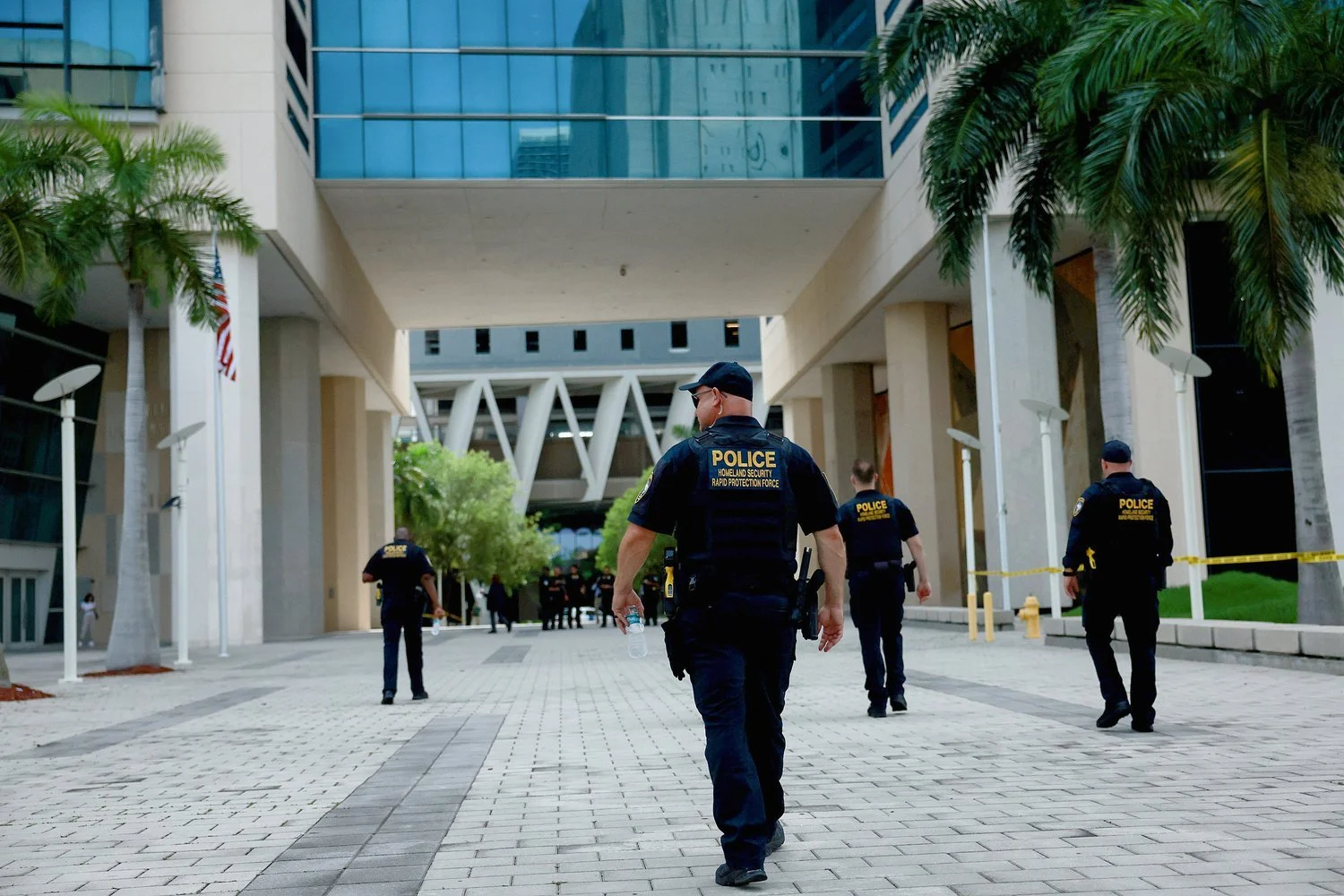
Threats are subtle
The encounters with the greatest consequences for officers and the public rarely begin with overt aggression. They begin with subtle behavioral deviations:
Movement patterns inconsistent with the surrounding environment
Pre-incident behaviors associated with individuals preparing for violence
Behaviors associated with individuals carrying weapons
Shifts in demeanor or interpersonal dynamics during an encounter
In rapidly evolving situations, these signals are easy to overlook or difficult to articulate clearly. Officers must frequently make decisions that may later be reviewed by supervisors, prosecutors, internal affairs, courts, or the public.
Tactical training and officer-safety procedures matter, but observation is often assumed rather than formally taught as a structured, repeatable skill. Without a shared framework, articulation becomes inconsistent, reports become uneven, and decisions become harder to defend.
Second Sight closes that gap
Training Designed For Law Enforcement
From Patrol to Investigations.
8 Hour Law Enforcement Program
Threat awareness training is built for the realities of law enforcement work. Officers learn a structured, repeatable process for establishing baselines, identifying meaningful deviations, and recognizing pre-incident behavioral indicators during patrol, traffic stops, calls for service, and investigative encounters.
Our 8-Hour Threat Awareness for Law Enforcement Training program strengthens officers' ability to recognize, interpret, and articulate what they observe in the field, supporting clearer reports, stronger testimony, and more defensible decisions under supervisory, prosecutorial, and public scrutiny
Interview Planning & Credibility Assessment
Advanced training for investigators and officers who conduct interviews as part of their work. Participants learn a science-based approach to collecting more relevant information, assessing credibility, and enhancing investigative decision-making through interview and evidence planning.
Our Interview Planning and Credibility Assessment in Law Enforcement Investigations program strengthens the investigative cycle from preparation through documentation, helping officers gather better information and clearly articulate the basis for their conclusions in case files, supervisor review, and prosecutorial handoff.
Bundle Both Offerings for Complete Coverage
Field observation and interviewing are two science-based approaches, applied at different points in the law enforcement cycle. Officers who train on both develop consistent frameworks for interpreting behavior, whether the encounter happens during a traffic stop or across the interview table, strengthening reporting and decision-making across every stage of their work.
See How Law Enforcement Agencies Strengthen Awareness
97% of law enforcement officers who completed Second Sight training reported improved ability to identify suspicious individuals based on behavioral cues. Download our corporate overview to see how the training works, what participants learn, and how it can help your agency.
Frequently Asked Questions
-
Law enforcement agencies benefit from the Observation and Visual Threat Detection Training Path, which includes the Threat Observation course and the Threat Awareness for Law Enforcement program. The Threat Observation course is the first component of the Threat Awareness for Law Enforcement program and can also be taken as a standalone course. The program is followed by the Threat Awareness Refresher, recommended six months after completion to reinforce observation and articulation skills over time.
-
Yes. For investigators and officers who conduct formal investigative interviews, the Interview Planning and Credibility Assessment program for law enforcement is available as a standalone offering. It teaches a structured, research-validated approach to interview planning, evidence disclosure, and credibility assessment.
-
Law enforcement training covers many critical areas, including tactics and investigations. Observation, however, is often assumed rather than formally taught as a structured skill. Second Sight provides a structured, teachable observation process that strengthens how officers recognize, interpret, and articulate what they are seeing.
-
Educators are often the first to observe behavior that does not align with the environment. Second Sight provides a structured, teachable observation process that helps them recognize and communicate those observations clearly — strengthening what behavioral intervention teams, administrators, and security personnel receive.
-
Instinct plays a real role in policing, but it is not always consistent or easy to explain. Second Sight strengthens instinct by making it more consistent, repeatable, and easier to articulate when an officer's decision is later reviewed.
-
Threat assessment focuses on evaluating known concerns. Second Sight strengthens the earlier stage — how officers recognize and clearly articulate behavioral indicators during everyday encounters — improving the quality of information that feeds into threat assessment and investigative decision-making.
-
Yes. The Threat Observation course and Threat Awareness for Law Enforcement program are available in both self-paced online and instructor-led formats, making them accessible for agencies of all sizes and compatible with departmental training schedules. Multi-license purchasing is available, along with monthly enrollment progress reports so administrators can track completion across the agency.
-
Second Sight teaches officers not just how to observe, but how to articulate what was observed and why it informed their decisions. This strengthens the clarity and defensibility of reports, testimony, and supervisory review — providing agency leadership with stronger documentation when officer decision-making is evaluated during critical incidents.
What Law Enforcement Professionals Are Saying About Out Training
-
“For the street officer, this is a systematic way to heighten their awareness and provide them a tool to quickly establish norms for the event they are working. It also provides new skills for identifying threats when not evaluating a larger venue, but in a 1 on 1 with a subject they may encounter.”
Threat Awareness for Law Enforcement | Law Enforcement Officer
-
“Course techniques are relevant and useful for both on-the-job and off-the-job. I try to teach my family about situational awareness. This class adds to my current level of knowledge.”
Threat Awareness for Law Enforcement | olice Chief
-
We use these techniques every day, but many of us have never been able to articulate the “why” in what we see. This program gives us a way to describe and explain what it took us years to observe. This is going to be fantastic for our new officers, who will have the fortune of learning this without having to wait for years to experience it.”
Threat Awareness for Law Enforcement | Training Sergeant
Strengthen judgment. Improve defensibility. Protect officers and the public.
Schedule a consultation to explore how Second Sight can support your agency.