
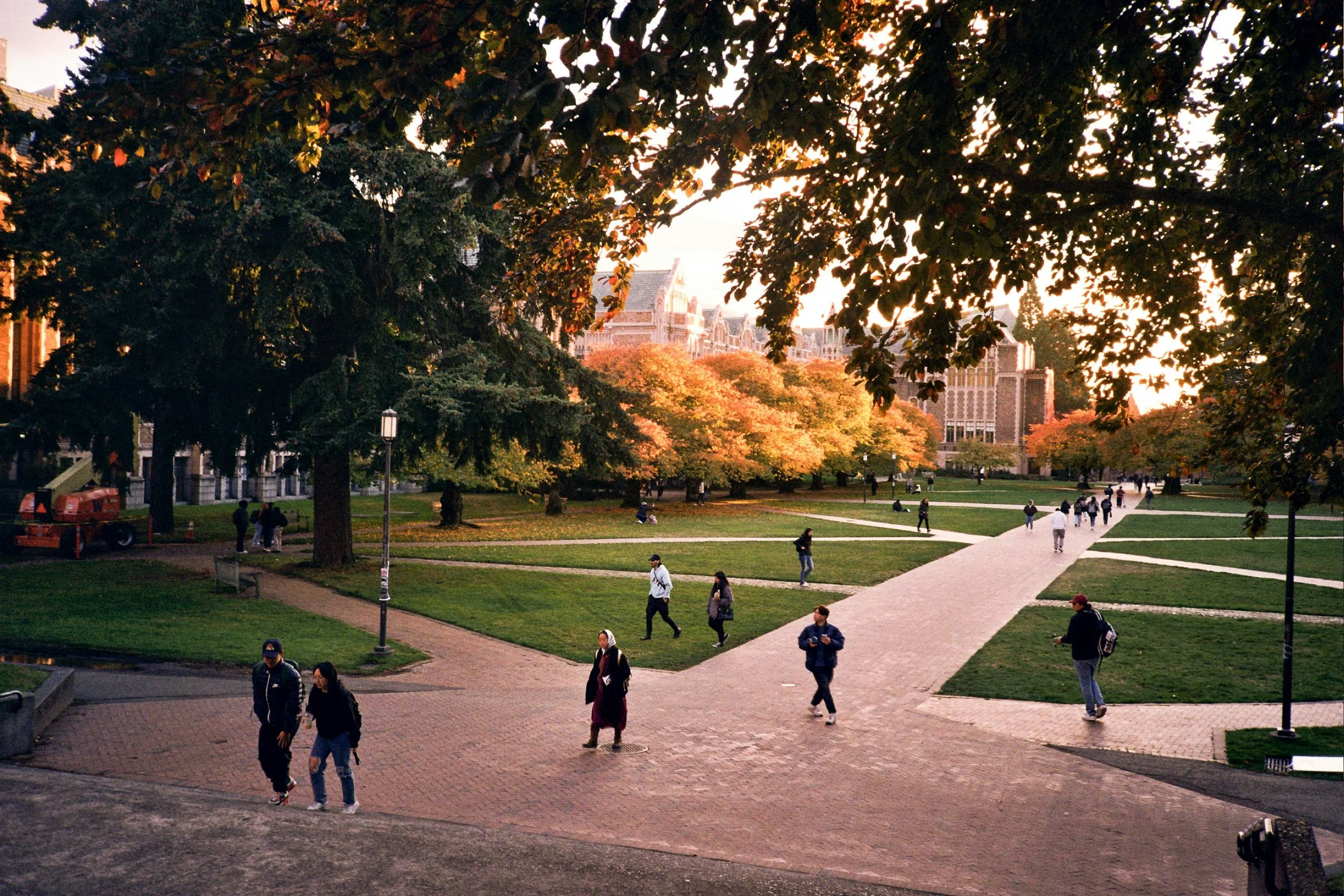
Colleges & Universities
Safer campuses begin with shared awareness.
Higher education environments span classrooms, residence halls, athletic facilities, campus events, and administrative offices, with constant interaction among students, faculty, staff, and visitors arriving from across the country and around the world. The incidents with the greatest safety and reputational consequences often begin as subtle behavioral deviations that are easy to overlook on busy campuses.
Second Sight equips students, faculty, administrators, behavioral intervention team members, and campus security personnel with a structured, repeatable observation process that improves early recognition of concerning behavior, supports earlier intervention, and reinforces consistent, defensible decisions. Awareness becomes a teachable skill shared across the entire campus, without disrupting the academic environment or student experience.
Threats are subtle
The incidents with the greatest impact on students, faculty, and campus communities rarely begin with overt threats. They begin with subtle behavioral deviations:
Changes in demeanor or escalating interpersonal conflict among students
Unusual movement, boundary-testing, or attempts at unauthorized access in residence halls or restricted areas
Behaviors associated with individuals carrying weapons
Patterns of distress, agitation, or withdrawal that do not match the environment
On large, open campuses, these signals are easy to overlook or difficult to articulate clearly. Faculty, administrators, Behavioral Intervention Team (BIT) members, and campus security make rapid decisions that may later be reviewed by university leadership, legal counsel, law enforcement, or the public.
Reporting systems and physical security alone do not reliably prevent safety incidents. Without a shared framework, recognition becomes inconsistent, reporting becomes uneven, and decisions become harder to defend.
Second Sight closes that gap
Training Designed For Everyone
One Framework. Multiple Roles
For Faculty, Staff, and Students
Practical situational awareness training that helps students, faculty, and staff recognize behavior that does not align with the campus environment and communicate those concerns clearly through our Situational Awareness For Safety course. The same foundational course supports every member of the campus community.
For Campus Security
Advanced behavioral detection training that sharpens how campus police and safety personnel interpret behavioral indicators, supports defensible decision-making, and improves the clarity of incident documentation through our Threat Awareness for Security Professionals or our Threat Awareness for Law Enforcement program.
Bundle Both Offerings for Complete Coverage
Students, faculty, and staff are often the first to notice behavior that does not align with the campus environment. BIT members, campus police, and safety teams are responsible for interpreting and responding. Second Sight programs follow the same framework and are designed to work together.
When students, staff, and security share a common observation framework, your institution builds a consistent safety posture across classrooms, residence halls, events, and administrative spaces, one that holds up whether reviewed by university leadership, BIT, legal counsel, or law enforcement.

See How Colleges and Universities Strengthen Awareness
Get key information on how Second Sight Training is applied in higher education environments, sent right to your inbox
Frequently Asked Questions
-
Faculty and staff are often the first to observe behavior that does not align with the environment or cannot be easily explained. Second Sight training provides a structured, teachable observation process that helps them recognize and communicate those observations, while enabling campus safety personnel to interpret and evaluate that information appropriately.
-
The training emphasizes awareness and professional judgment rather than restrictive measures. The goal is to help personnel recognize concerning behavior while maintaining a welcoming campus environment. This includes recognizing behaviors such as unauthorized access attempts or boundary testing without disrupting the open nature of the campus.
-
Behavioral Intervention Teams play a critical role in evaluating and managing cases once concerns are identified. Second Sight training helps faculty and staff recognize behavior that does not align with the environment or cannot be easily explained and clearly communicate those observations earlier, improving the quality of information provided to those teams.
-
Reporting systems are only effective when personnel recognize and clearly describe what they observed. Second Sight training strengthens the quality and clarity of the information entering those systems by providing a structured observation process for recognizing and describing concerning behavior, ensuring campus safety teams receive clearer, more actionable information.
Why do you need training?
Listen to some of our customers.
Strengthen judgment. Improve defensibility. Protect students and staff.
Schedule a consultation to explore how Second Sight can support your campus.